Does Laser Hair Removal Cause Cancer?
There is no evidence that laser hair removal causes cancer, including skin cancer. It uses non-ionising light, deep red and near-infrared, well outside the ultraviolet range that damages DNA and causes most skin cancers. What that light does to the skin is heat: enough to disable a hair follicle, and that is all.
There is one honest caveat, and it concerns moles rather than the laser itself. Both are explained below, along with what to do if you have had cancer.
Laser light is not the kind of radiation that causes cancer
Radiation covers everything from radio waves to X-rays, and what matters is how much energy each photon carries. X-rays and gamma rays are ionising: they carry enough energy to break DNA directly. Ultraviolet light, from the sun and tanning beds, carries less but can still damage DNA, which is why it is the main cause of skin cancer.
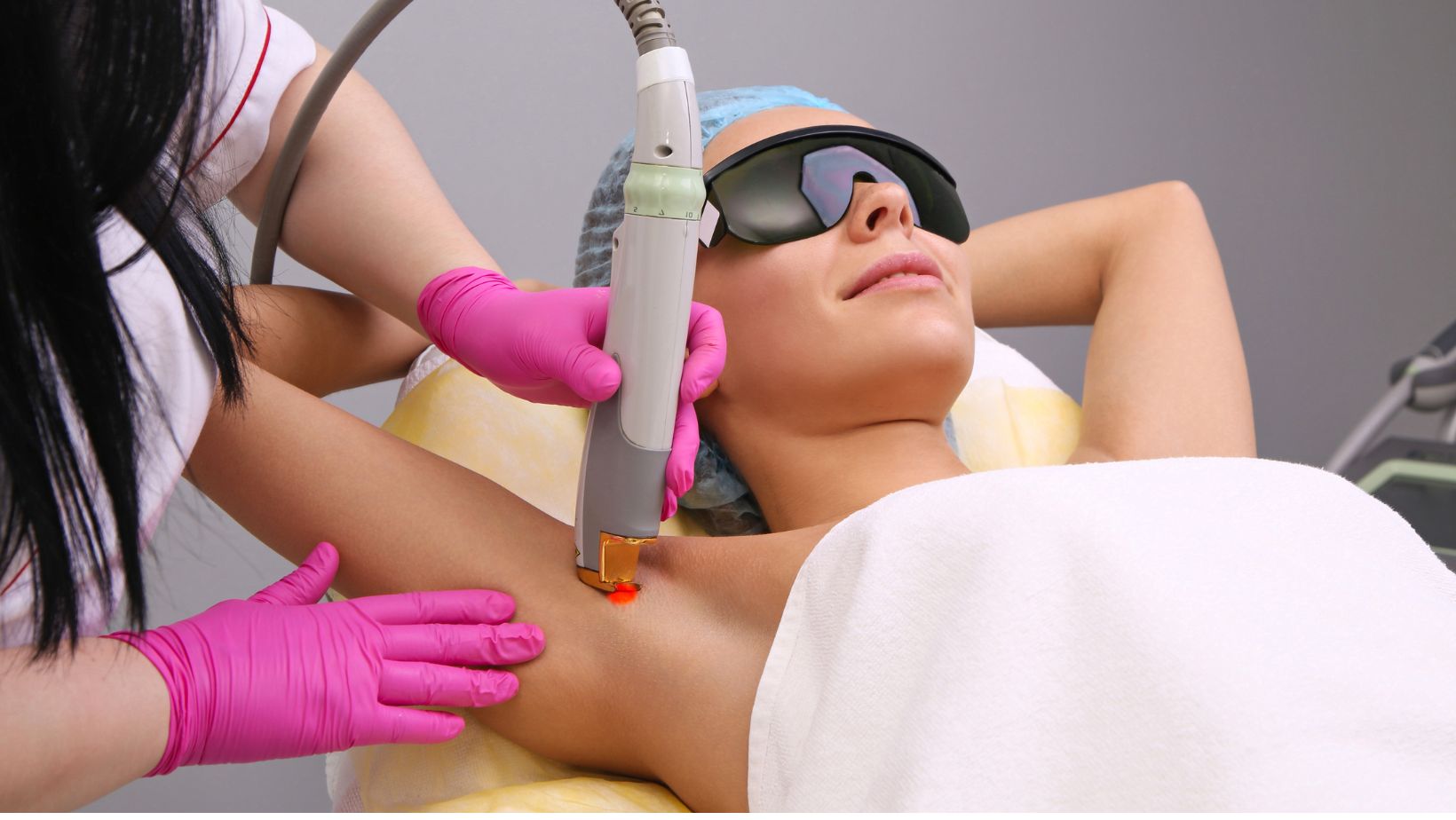
Hair-removal lasers sit on the far side of visible light. They use wavelengths of roughly 755 to 1,064 nanometres, about twice as long as ultraviolet, with less energy in each photon. The Health Canada approved FEMME 4D used at our clinics combines four wavelengths, including 808 nm and 1064 nm. At these wavelengths the light does not have the energy to damage DNA the way ultraviolet does. Instead it is absorbed by the melanin in the hair and turned into heat, which is how it disables the follicle.
What the evidence says
Laser hair removal has been in clinical use for nearly thirty years, and no link to cancer has been found in that time. Cancer Council Australia‘s answer to this question is a fair summary: non-ionising radiation is safe, and for most people laser hair removal is safe.
It is also candid that the long-term effects of laser therapy, including any possible change in cancer risk, have not been specifically studied, and it advises caution for people with a personal or family history of skin cancer or atypical moles. No evidence of harm, no plausible way for this light to damage DNA, and no dedicated long-term cancer study: that is the honest position. Anyone claiming it has been proven to carry zero long-term risk is overstating it. Anyone claiming it causes cancer has no evidence for that.
The real caveat: moles
Moles are pigmented, and pigment is what a hair-removal laser is built to target. A mole in the treatment area would absorb energy that the surrounding skin does not, so moles are covered or worked around rather than treated. Researchers have also reported changes in the appearance of atypical moles after laser hair removal, and change is exactly what you and your doctor look for when checking a mole.
So if a mole in the area you want treated is new, changing, itchy, bleeding, or irregular in shape or colour, have a doctor look at it before any laser treatment there. If you have had skin cancer, or it runs in your family, tell us at consultation and check with your doctor first.
If you have, or have had, cancer
Speak to your oncology team before booking, and tell us at consultation. During treatment such as chemotherapy or radiotherapy the skin is often more sensitive, and some medicines make it react more strongly to light, so timing matters. We review medications and history before any first session, and if waiting is the right answer, we will say so.
What about at-home IPL?
Home IPL devices use filtered broad-spectrum light in the visible and near-infrared range, which is also non-ionising. The real questions with home devices are whether they work on your hair and whether they are safe for your skin tone, which we cover in does at-home laser hair removal work?
The side effects laser hair removal does have
Redness and swelling around the follicles, usually gone within hours to a couple of days. Less often, temporary darkening or lightening of the skin, or blistering when the settings are wrong for the skin tone. None of these is linked to cancer, and the full list is in our guide to laser hair removal side effects. If your worry is fertility rather than cancer, the same physics applies: see does laser hair removal affect fertility?
Still not sure? Bring the question to us
The laser uses non-ionising light and works only in the skin. If you have a specific concern, such as a history of skin cancer, a medication or a mole you are watching, raise it at consultation, where we can look at your actual skin rather than answer in general.
A consultation is built into your first appointment. We review medications and history before any first session, and we will decline if declining is the right answer.
Frequently asked questions
Does laser hair removal cause cancer?
There is no evidence that it does. It uses non-ionising red and near-infrared light, which heats the hair follicle but does not carry enough energy to damage DNA the way ultraviolet light or X-rays can.
Can laser hair removal cause skin cancer?
There is no evidence that it does. Skin cancer is driven mainly by ultraviolet light from the sun and tanning beds. Hair-removal lasers use much longer wavelengths, roughly 755 to 1,064 nanometres.
Is laser hair removal safe if I have moles?
Moles are covered or worked around during treatment, because their pigment would absorb the laser’s energy. Any mole that is new or changing should be checked by a doctor before treatment near it.
Can I have laser hair removal if I have had cancer?
Check with your oncology team first and tell us at consultation. Skin can be more sensitive during treatment such as chemotherapy or radiotherapy, and some medicines make it react more strongly to light.
Is the light from laser hair removal radiation?
Technically yes, in the way that light from a lamp is radiation. It is non-ionising radiation, which is different from the ionising radiation in X-rays that can damage cells.
Has long-term cancer risk been studied?
Not specifically. Cancer Council Australia notes that long-term effects have not been studied, but describes laser hair removal as safe for most people, with caution for anyone with a personal or family history of skin cancer or atypical moles.
Sources
- Cancer Council Australia, Laser hair removal is fine for those without a history of skin cancer, iHeard.